Window Tinting Services Serving Wylie, Rockwall and Plano, TX
Window tinting is the professional application of specialized window film to a vehicle’s glass surfaces to modify light transmission, reduce heat penetration, and improve interior comfort. At Straightline Paintless Dent Repair serving Wylie, Rockwall and Plano, TX, window tinting is performed using precision-cut film designed to fit each window accurately while maintaining clear visibility and consistent appearance.
The process involves applying a thin, multi-layer film to the interior side of automotive glass. Once installed, the film alters the amount of visible light, ultraviolet radiation, and infrared heat entering the vehicle. This results in a controlled interior environment while also changing the exterior appearance of the glass.
How Window Tinting Film Works
Window tinting works through engineered film layers that filter and manage different types of light and heat energy before they enter the vehicle interior.
Light Filtration Layer
The film reduces visible light transmission, controlling brightness levels inside the vehicle without obstructing essential visibility.
UV Protection Layer
A built-in protective layer blocks a significant portion of ultraviolet radiation, helping reduce interior fading and material degradation over time.
Heat Rejection Layer
Certain films are designed to reflect or absorb infrared heat, helping regulate interior temperature and reduce heat buildup.
Adhesive Bonding Layer
A pressure-sensitive adhesive allows the film to bond securely to the glass surface once properly installed and cured.
Window Tint Installation Process
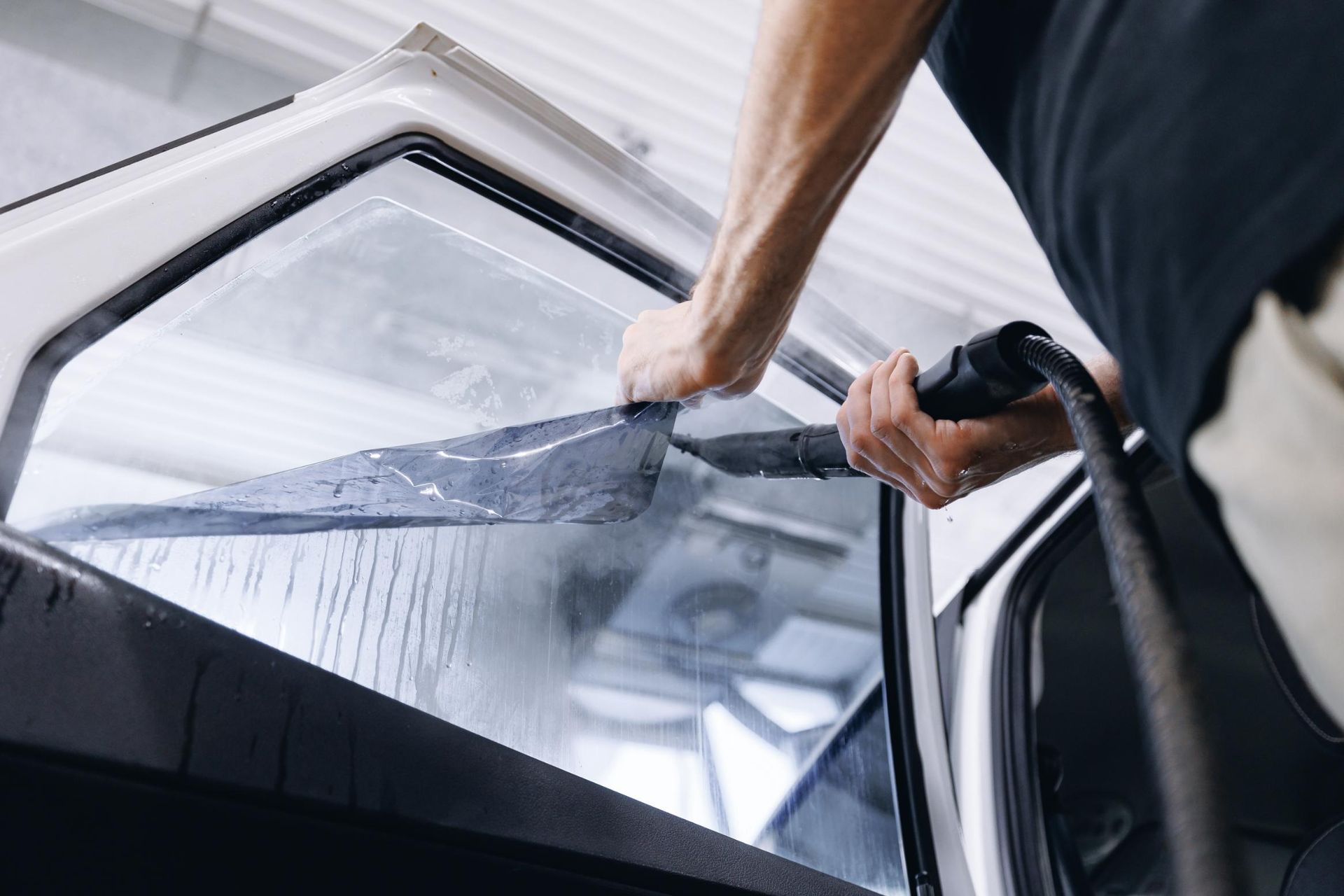
Window tinting requires careful preparation and precise installation to ensure a smooth, bubble-free finish that adheres correctly to the glass.
Glass Cleaning and Preparation
Each window is thoroughly cleaned to remove dust, oils, and residues that could interfere with film adhesion. Even small particles can affect the final appearance if not removed.
Film Cutting and Shaping
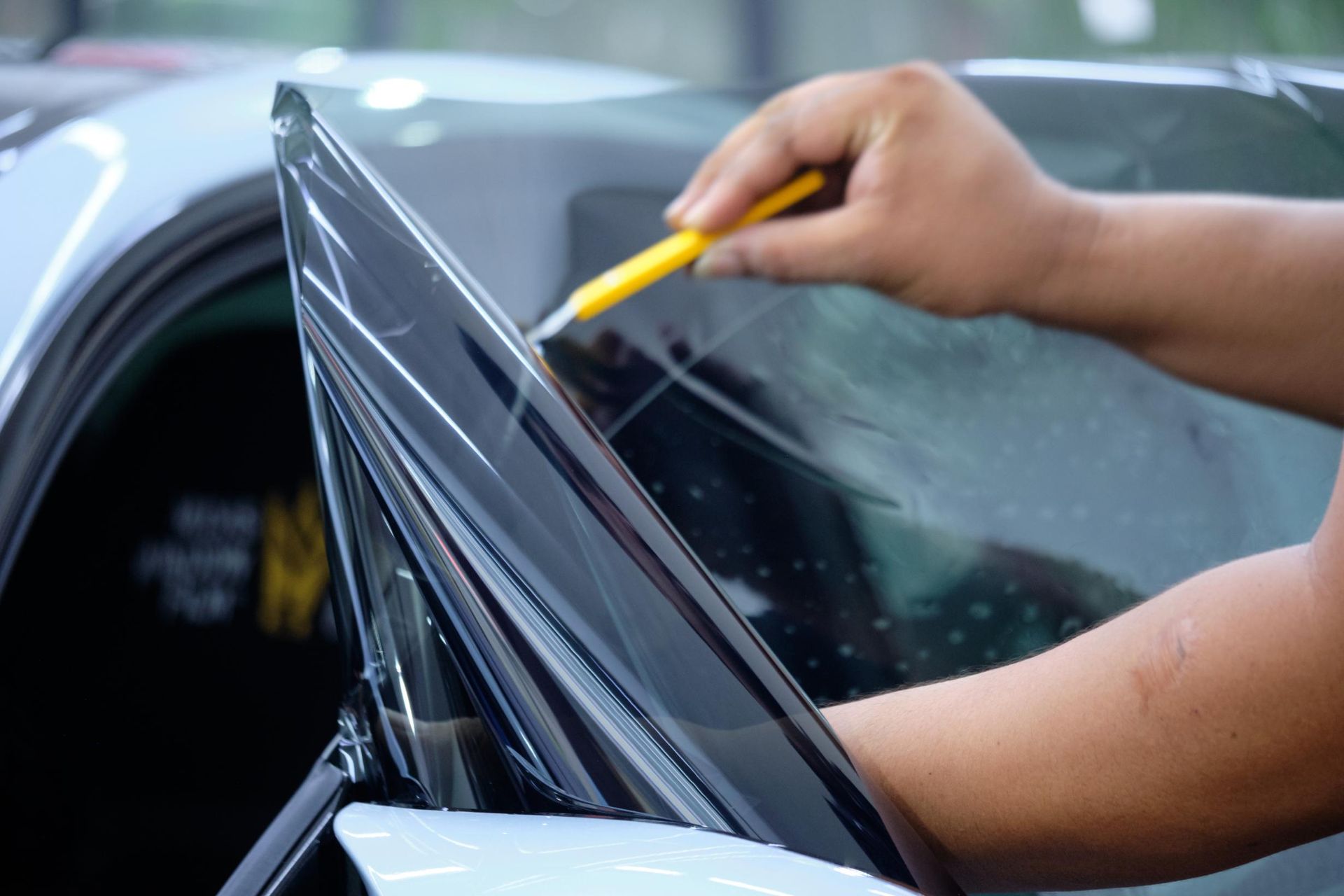
The film is measured and cut to match the exact dimensions of each window. Heat shaping may be used to contour the film to curved glass surfaces.
Application and Positioning
The film is applied to the interior surface using a slip solution that allows adjustment before final placement. This ensures accurate alignment.
Squeegee Finishing and Bonding
Air and excess solution are carefully removed using specialized tools, allowing the film to bond evenly to the glass surface.
Types of Window Tint Film
Different types of window film are available depending on the level of heat rejection, appearance, and performance required.
Dyed Film
Dyed film focuses on reducing visible light and enhancing privacy. It provides a darker appearance but limited heat rejection compared to advanced films.
Metalized Film
This type of film includes microscopic metal particles that help reflect heat and strengthen the glass surface slightly.
Carbon Film
Carbon-based film offers improved heat rejection and a matte finish that does not fade over time.
Ceramic Film
Ceramic tint uses advanced nano-ceramic technology to block heat and UV rays while maintaining high visibility and clarity.
Benefits of Window Tinting Performance Features
Window tinting provides functional changes to a vehicle’s glass that affect comfort, visibility, and interior protection.
Heat Reduction
Tinted windows reduce the amount of heat entering the vehicle, helping maintain a more stable interior temperature.
UV Ray Blocking
Window film blocks a large percentage of UV rays, which helps protect interior materials such as upholstery, dashboards, and trim surfaces.
Glare Reduction
Tinting reduces glare from sunlight and headlights, improving driving comfort in bright or low-light conditions.
Interior Privacy
Tinted glass limits visibility into the vehicle interior, offering increased privacy for passengers and belongings.
Legal Considerations for Window Tinting
Window tint levels are regulated by law and vary depending on the location and type of vehicle. These regulations determine how dark or reflective tint can be applied to different windows.
Visible Light Transmission (VLT)
VLT refers to the percentage of light allowed to pass through the film and glass combination. Lower percentages indicate darker tint.
Front Window Regulations
Front side windows typically have stricter limits to maintain driver visibility and road safety compliance.
Rear Window Variations
Rear windows often allow darker tint levels depending on local regulations.
Compliance Standards
Proper installation ensures that tint levels remain within legal requirements while still achieving desired performance outcomes.
Window Tinting Serving Wylie, Rockwall and Plano, TX for Automotive Glass Enhancement
In Wylie, Rockwall and Plano, TX, vehicles are regularly exposed to strong sunlight and elevated temperatures, making window tinting a practical solution for interior comfort and UV protection. Straightline Paintless Dent Repair applies window film using controlled installation techniques that ensure proper adhesion, clarity, and alignment across all glass surfaces.
Window tinting also contributes to maintaining the condition of a vehicle’s interior by reducing prolonged exposure to heat and sunlight. Over time, untreated glass allows significant solar energy to enter the cabin, which can lead to fading and material wear. Window film helps regulate this exposure while maintaining visibility and exterior appearance.
The installation process is designed to achieve a smooth, consistent finish across all windows, ensuring that the film integrates cleanly with the vehicle’s glass structure. In environments like Wylie, Rockwall and Plano, TX where sun exposure is frequent and intense, window tinting serves as a functional enhancement that modifies light and heat transmission while preserving interior condition over time.